
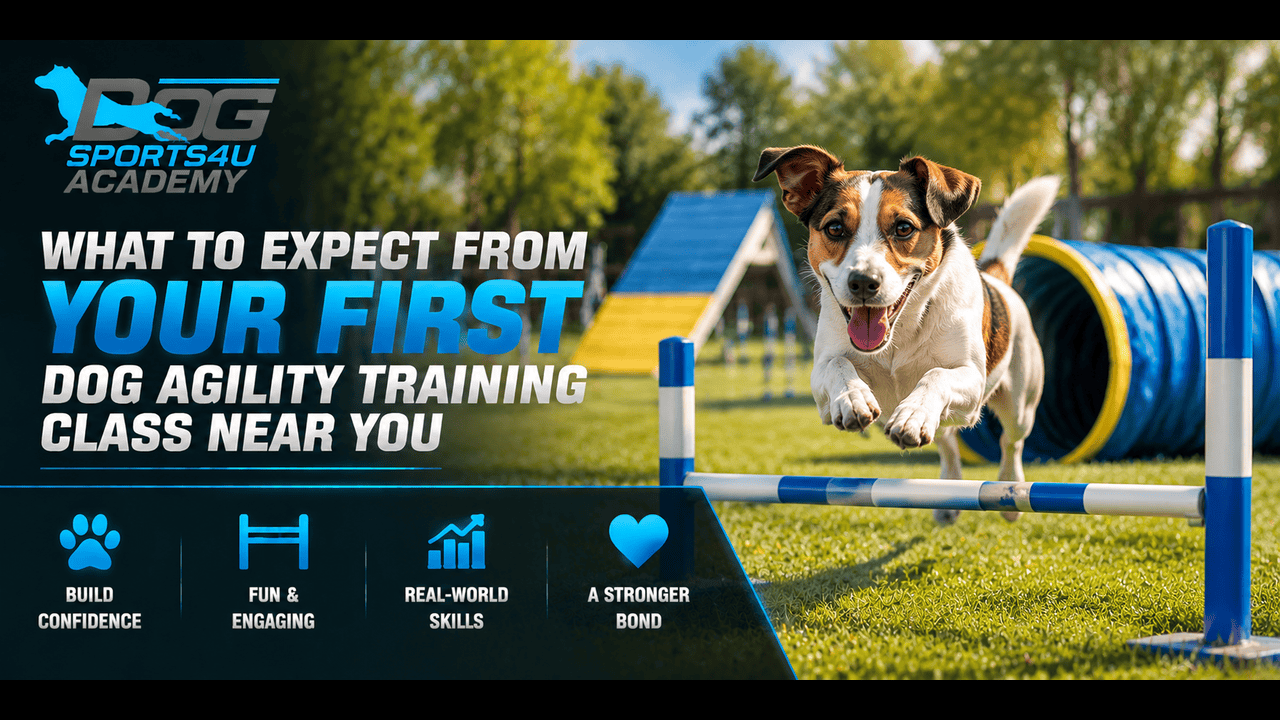
What to Expect From Your First Dog Agility Training Class Near You
Oct 02, 2026Watching a dog fly through weave poles and clear a jump with total confidence looks effortless from the sidelines. It rarely feels that way during a first class. Searching for dog agility training near me usually starts with a vision of that polished performance and ends with the far messier, far more rewarding reality of actually building it from scratch.
That gap between expectation and week one is completely normal, and understanding it ahead of time makes the entire experience less intimidating.
What Actually Happens During an Introductory Session
Most first classes focus far less on obstacles than newcomers expect. Building drive, engagement, and a dog's willingness to work off-leash near distractions comes first, since a dog that isn't focused on its handler will struggle with even the simplest tunnel or jump.
Expect plenty of foundational groundwork before your dog ever touches equipment at full speed. This patience early on pays off enormously once actual course work begins.
Handler Skills Matter as Much as Canine Skills
Agility is a two-way sport. Body position, timing, and clear communication from the handler shape a dog's performance just as much as the dog's own physical ability, which surprises many owners walking in expecting the training to focus solely on their dog.
Finding Dog Agility Classes Near You That Fit Your Dog's Level
Dog agility classes near me vary enormously in structure and pacing. Some programs push toward competition readiness quickly, while others prioritize confidence building and genuine enjoyment for dogs who simply need a physical and mental outlet rather than a title.
Matching your dog's temperament and energy level to the right class format prevents frustration on both ends of the leash during those crucial early sessions.
Agility Training for Dogs Beyond the Competition Ring
Agility training for dogs offers benefits that extend well past ribbons and titles. Dogs gain body awareness, confidence navigating novel obstacles, and a genuine outlet for the kind of mental and physical energy that otherwise turns into destructive behavior at home.
Even dogs with no competitive aspirations whatsoever often become calmer, more focused companions simply through the structured engagement agility naturally demands.
Choosing the Right Dog Agility Trainer for Your Team
A dog agility trainer with genuine competition experience brings insight that recreational-only instructors often lack, particularly around building drive correctly from the very beginning rather than rushing a dog onto equipment before the foundation is ready.
DogSports4U's own competition background at the highest levels of canine sport shapes exactly this kind of layered, patient approach, treating every handler-dog team as a genuine partnership worth developing properly.
Frequently Asked Questions
What age can a dog start agility training?
Foundational engagement work can begin as early as puppyhood, though full jumping and equipment work typically wait until a dog's growth plates have closed.
Do I need a specific breed for agility training?
No, agility welcomes all breeds and sizes, though drive, focus, and physical soundness matter more than breed alone.
How long before my dog can compete in agility trials?
Most dogs need six months to a year of consistent foundational training before they're genuinely ready for competition-level courses.
Is agility training good for anxious or reactive dogs?
Often yes, since the structured focus and confidence-building involved can meaningfully improve a dog's overall emotional resilience.
What equipment will my dog need for agility classes?
Most facilities provide equipment during class, though a properly fitted harness and reliable leash are typically required for handlers to bring.
Don't miss a beat!
New tips, motivation, and classes delivered to your inbox.
We hate SPAM. We will never sell your information, for any reason.
