
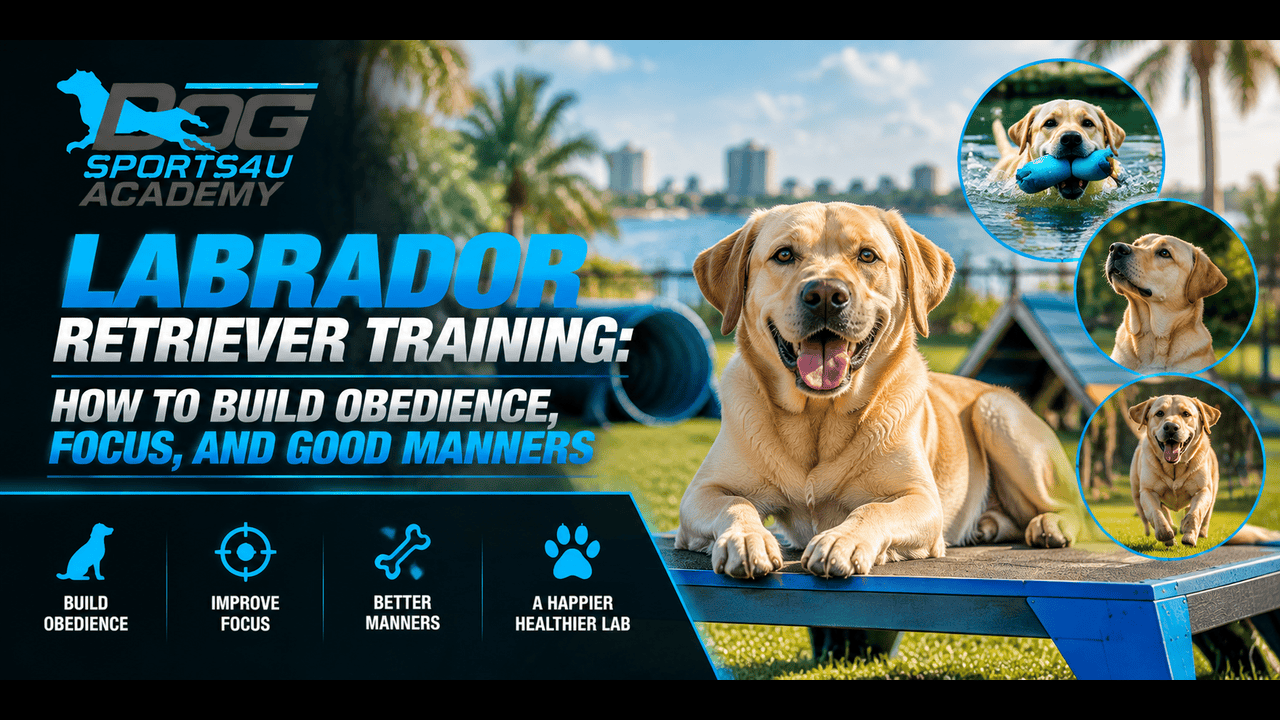
Labrador Retriever Training: How to Build Obedience, Focus, and Good Manners
Oct 09, 2026Few breeds combine boundless enthusiasm with genuine intelligence quite like the Labrador Retriever. That exact combination is also precisely why so many owners struggle to contain it. Labrador retriever training done well channels a naturally eager, food-motivated mind into a dog capable of remarkable focus, rather than the perpetually distracted, counter-surfing companion so many households know all too well.
The good news is that Labradors are among the most trainable breeds in existence, provided their energy and enthusiasm get pointed in the right direction from the start.
Why Labradors Learn Fast but Test Boundaries Faster
Labradors possess a genuine eagerness to please paired with a retrieving instinct bred over generations for cooperative work alongside handlers. This makes them remarkably responsive to positive, reward-based methods, often mastering new commands faster than many other breeds.
That same enthusiasm, however, can tip into impulsiveness without consistent structure. A Labrador that hasn't been taught boundaries early often becomes the dog dragging its owner toward every person, dog, and discarded sandwich along a walking trail.
Food Motivation Is a Double-Edged Advantage
Labradors respond exceptionally well to food-based reinforcement, but that same motivation contributes to the breed's well-documented tendency toward weight gain. Balancing effective reward-based training with genuine portion awareness matters more with this breed than almost any other.
Training a Labrador Retriever Around Real-Life Distractions
Training a Labrador Retriever successfully means practicing obedience specifically around the distractions that matter in daily life, other dogs, food on counters, guests arriving at the door. A Labrador that sits perfectly in a quiet living room but ignores every cue at the dog park hasn't truly generalized the training yet.
Consistent exposure to controlled distraction, gradually increased over time, builds the kind of reliable focus that holds up in genuinely unpredictable, real-world situations.
Labrador Obedience Training as a Lifelong Foundation
Labrador obedience training should extend well beyond puppyhood basics. This breed's high energy and prolonged adolescent phase, often lasting into the second or third year, mean ongoing reinforcement matters far longer than owners typically expect.
A well-trained adult Labrador reflects years of consistent reinforcement, not a single successful puppy class completed and then largely forgotten.
What a Skilled Labrador Trainer Brings to the Process
An experienced Labrador trainer understands how to channel this breed's retrieving drive and food motivation into structured engagement rather than fighting against those instincts entirely. Working with natural tendencies rather than suppressing them consistently produces calmer, more genuinely fulfilled dogs.
DogSports4U's whole-dog approach, addressing physical conditioning, mental engagement, and nutrition together, suits Labradors particularly well, since this breed's wellbeing depends on far more than obedience commands alone.
Frequently Asked Questions
At what age should Labrador training begin?
As early as eight weeks old, focusing on foundational manners, socialization, and impulse control before the breed's boundless energy fully develops.
Why does my Labrador ignore commands outside the house?
Training likely hasn't been generalized enough across different environments and distraction levels, which is common without deliberate, varied practice.
How much exercise does a Labrador need daily?
At least sixty to ninety minutes of combined physical and mental engagement, given the breed's high energy and working heritage.
Are Labradors good with children and other pets?
Generally yes, since the breed's cooperative, sociable temperament makes them naturally well-suited to family life with proper early socialization.
When does a Labrador typically calm down?
Most Labradors mature emotionally between two and three years old, though consistent training throughout that period significantly accelerates genuine settling.
Don't miss a beat!
New tips, motivation, and classes delivered to your inbox.
We hate SPAM. We will never sell your information, for any reason.
