
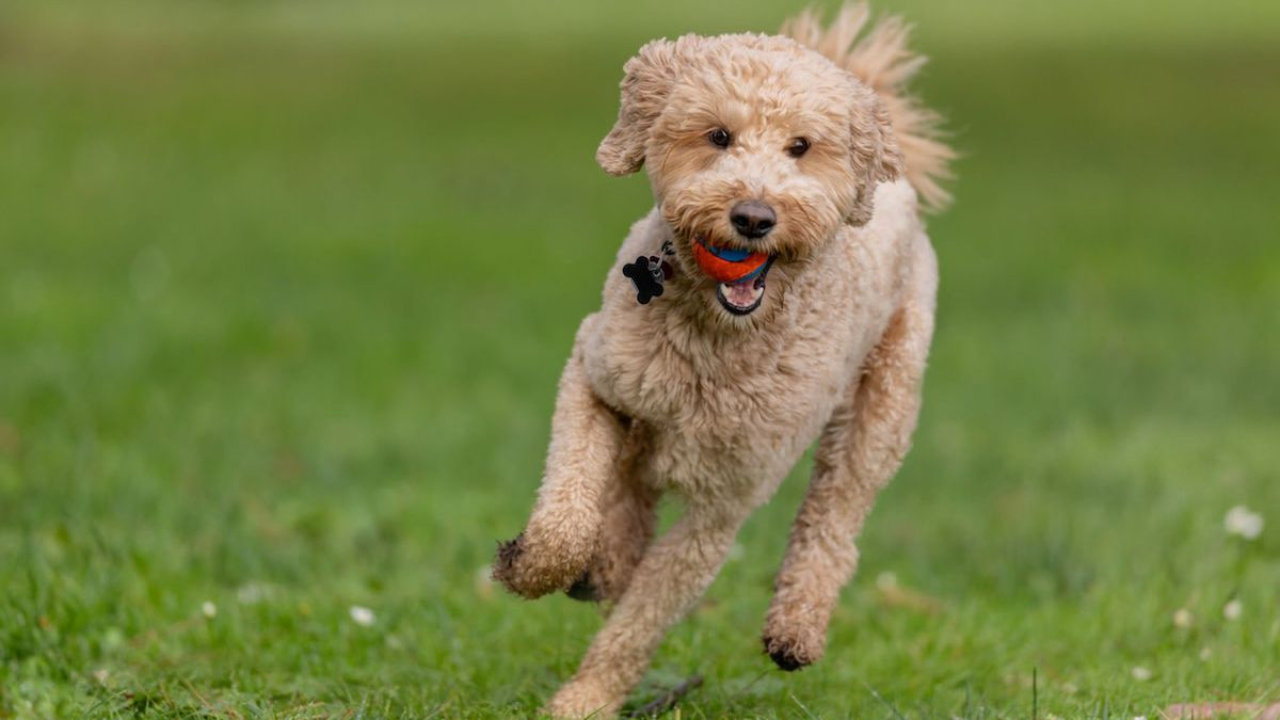
How to Train a Goldendoodle to Be a Service Dog
Apr 25, 2026There is a moment that happens in many Goldendoodle households: the owner looks at their dog, that impossibly intuitive, absurdly affectionate, curl-covered creature who somehow already knows when you are having a bad day and thinks, this dog could help someone profoundly. That instinct is not misplaced.
Goldendoodle training in Sarasota for service work is a legitimate and increasingly pursued path, and these dogs, when properly selected and trained, are genuinely exceptional at it.
But there is a significant gap between the potential and the execution, and understanding that gap is the first step toward crossing it with integrity.
Why Goldendoodles Make Compelling Service Dog Candidates
The Goldendoodle inherits its service potential from both parent breeds. The Golden Retriever contributes emotional sensitivity, an enduring desire to please, and the kind of steady temperament that holds together under the pressure of public environments.
The Poodle contributes raw cognitive horsepower, trainability under complex conditions, and a low-shedding coat that matters enormously for handlers with allergies. The result is a dog that often presents with exactly the profile service dog training requires: calm, attentive, socially adaptable, and highly food and play-motivated.
They have been successfully trained for psychiatric support, mobility assistance, medical alert work, including blood sugar monitoring, and emotional grounding for individuals with PTSD and anxiety disorders. Their size range, from miniature to standard, allows for matching with handlers across a wide spectrum of needs.
Doodle Training: The Non-Negotiable Foundation
Train a Goldendoodle for anything service work or basic household manners, and you will encounter the same reality: this breed has significant enthusiasm that must be channeled before precision can be built.
Goldendoodles are not difficult dogs, but they are exuberant ones, and exuberance in a service dog is a liability until it is shaped into sustained focus and impulse control. Foundational obedience is not just a prerequisite for service training. It is the scaffolding upon which every subsequent task is built.
A Goldendoodle working toward goldendoodle service dog training needs to demonstrate reliable response to basic commands in high-distraction environments, the ability to settle calmly for extended periods, loose-leash walking without soliciting attention from strangers, and stable emotional responses to unpredictable sights, sounds, and surfaces. These skills require months of consistent, structured work before any task-specific training begins.
The Assessment Question Every Owner Must Answer Honestly
Not every Goldendoodle has the temperament for service work, and this is not a failure. It is simply a reality of individual variation within any breed.
The traits that disqualify a dog from service work, high environmental reactivity, inability to disengage from distractions, and stress responses to novel stimuli, are often exactly the traits that make that same dog a joyful, loving family companion.
A legitimate temperament assessment by an experienced trainer evaluates confidence, handler orientation, noise sensitivity, recovery from mild stress, and food or play drive as a training motivator. That assessment should happen before a significant time, and investment goes into a service training program.
Service Dog vs. Therapy Dog vs. Emotional Support Animal: The Distinction That Matters
This is one of the most persistently misunderstood areas in dog training, and the distinction has legal and practical weight. A service dog is trained to perform specific tasks that directly mitigate a handler's disability and carries full public access rights under the Americans with Disabilities Act.
A therapy dog provides comfort to groups of people in institutional settings and requires specific certification, but does not carry ADA public access rights.
An emotional support animal provides companionship and comfort to their specific owner and requires no formal task training. Knowing where your goal fits in this framework before beginning training is essential, as the pathway, the timeline, and the standard of performance are entirely different for each category.
What the Timeline Actually Looks Like
Professional service dog training typically spans one to two years from the beginning of foundational work to reliable public access performance. This is not a number designed to discourage; it reflects the genuine complexity of preparing a dog to work consistently across every environment, emotional context, and physical demand their handler's life involves. Sarasota-based programs that work with Goldendoodles toward service roles pair foundational obedience, task training, and progressive public access work, while keeping the handler involved and informed at every stage.
The Curl-Covered Partner Worth Every Hour of Work
A fully trained service Goldendoodle is something remarkable to witness. They move through the world with a composure that belies their playful nature at home, anchored entirely to their handler's needs.
That transformation from enthusiastic puppy to dependable working partner does not happen by accident. It happens through precision, patience, and the right professional expertise, which is exactly what the dogs that thrive in this role have always had behind them.
FAQs
Don't miss a beat!
New tips, motivation, and classes delivered to your inbox.
We hate SPAM. We will never sell your information, for any reason.
